

Would you like to have your watchlist on all your devices? Log in or register for free.
Sailboat Jeanneau Yachts 60 for sale
Jeanneau Yachts 60 - on Yachtall.com
Your search: sailboat + manufacturer: Jeanneau + Jeanneau Yachts 60
 Create alert




Jeanneau Yachts 60
Sailboat / cruising yacht: Jeanneau, used boat, GRP/polyesterLength x beam: 18.28 m x 5.20 m, 18.28 x 5.20 m built: 2024, cabins: 3
Engine: Yanmar 4LV150CR, 150 hp (110 kW), diesel
€ 1,353,664
Location: France, Ab Werk
2024
 Company: Gründl Bootsimport


Jeanneau Yachts 60
Sailboat / cruising yacht: Jeanneau, used boat, GRP/polyesterLength x beam: 18.28 m x 5.20 m, 18.28 x 5.20 m built: 2023, cabins: 3
Engine: Yanmar 4LV150CR, 150 hp (110 kW), diesel
€ 1,295,800
Location: Germany, Flensburg
2023
Company: Gründl Bootsimport


Jeanneau Yachts 60
Sailboat / sloop: Jeanneau, used boat, GRP/polyesterLength x beam: 18.29 m x 5.18 m, 18.29 x 5.18 m built: 2023
Engine: Yanmar LA4L150CR, 150 hp (110 kW), diesel
£ 1,178,416
Location: Great Britain, Largs
2023
Company: Band of Boats


Jeanneau Yachts 60
Sailboat / cruising yacht: Jeanneau, used boat, GRP/polyesterLength x beam: 18.28 m x 5.20 m, 18.28 x 5.20 m built: 2023, cabins: 3
Engine: Yanmar 4LV150CR, 150 hp (110 kW), diesel
€ 1,425,900
Location: France, Werk
2023
Company: Gründl Bootsimport


Jeanneau Yachts 60
Sailboat / sloop: Jeanneau, used boatLength x beam: 18.28 m x 5.20 m, 18.28 x 5.20 m built: 2024, cabins: 3
Engine: Yanmar, 150 hp (110 kW), diesel
€ 1,199,000
Location: France
2024
Company: Band of Boats


Jeanneau Yachts 60
Sailboat / sloop: Jeanneau, used boatLength x beam: 18.28 m x 5.20 m, 18.28 x 5.20 m built: 2024, cabins: 3
Engine: Yanmar, 150 hp (110 kW), diesel
€ 1,199,000
Location: France
2024
Company: Band of Boats


Jeanneau 60
Sailboat / sailing yacht: Jeanneau, used boat, GRP/polyesterLength x beam: 18.28 m x 5.20 m, 18.28 x 5.20 m built: 2023
Engine: Yanmar, 150 hp (110 kW), diesel
€ 860,000
Location: Croatia, Split
2023
Company: Bach Yachting International


Jeanneau Yachts 60
Sailboat / cruising yacht: Jeanneau, used boat, GRP/polyesterLength x beam: 18.28 m x 5.20 m, 18.28 x 5.20 m built: 2022
Engine: Yanmar 4LV150CR, 150 hp (110 kW), diesel
€ 839,000
Location: Germany, Ostsee
2022
Company: Gründl Bootsimport


Jeanneau Yachts 60
Sailboat / sloop: Jeanneau, used boat, GRP/polyesterLength x beam: 18.29 m x 5.18 m, 18.29 x 5.18 m built: 2025
Engine: Yanmar, 150 hp (110 kW), diesel
£ 998,000
Location: Great Britain, Swansea
2025
Company: Band of Boats


Jeanneau Yachts 60
Sailboat / sailing yacht: Jeanneau, new boat, GRP/polyesterLength x beam: 18.39 m x 5.20 m, 18.39 x 5.20 m built: 2027, cabins: 5
Engine: Yanmar 4LV150, 150 hp (110 kW), diesel
price on request
Location: Netherlands
2027
Company: Nautisch Kwartier Stavoren


Jeanneau Yachts 60
Sailboat / sailing yacht: Jeanneau, used boatLength x beam: 18.28 m x 5.20 m, 18.28 x 5.20 m built: 2023
Engine: Yanmar 150PS, 150 hp (110 kW)
€ 1,023,043
Location: Germany, Werder Havel
2023
Company: Aqua Marin Boote & Yachten
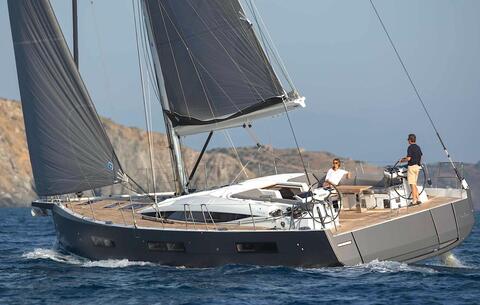


Jeanneau Yachts 60
Sailboat / sloop: Jeanneau, new boatLength x beam: 18.28 m x 5.20 m, 18.28 x 5.20 m built: 2026, cabins: 3
Engine: 150 hp (110 kW), diesel
price on request
Location: Spain, Alicante (Alacant)
2026
Company: Band of Boats

Jeanneau Yachts 60
Sailboat / sailing yacht: Jeanneau, used boatLength x beam: 18.26 m x 5.21 m, 18.26 x 5.21 m built: 2021
Engine: Yanmar, 150 hp (110 kW), diesel
€ 800,000
Location: Greece, Athens
2021
Company: MGM Boats


Jeanneau Yachts 60
Sailboat / sloop: Jeanneau, new boatLength x beam: 18.02 m x 5.20 m, 18.02 x 5.20 m built: 2026, cabins: 3
Engine: 110 hp (81 kW), diesel
price on request
Location: France, Les Herbiers
2026
Company: Band of Boats


Jeanneau Yachts 60
Sailboat / sloop: Jeanneau, new boatLength x beam: 18.18 m x 5.20 m, 18.18 x 5.20 m built: 2026, cabins: 3
Engine: Yanmar, 150 hp (110 kW), diesel
£ 817,632
Location: France, Les Herbiers
2026
Company: Band of Boats

Jeanneau Yachts 60 for sale – The ‘completely different’ sailing yacht
Are you looking to buy a sailing yacht in the premier class around 60 feet? In that case, realistically speaking, your budget for a boat will range between €1 and 1.4 million for a good second-hand yacht of this size; for a brand-new sailing yacht built to your specifications, you should expect to pay between €1.4 and 1.7 million. Net, of course.
Customers in this segment can expect shipyards – including mass-market boat manufacturers – to deliver superior build quality, high-grade materials and, above all, a wide range of customisation options. In recent years, the major manufacturers have increasingly tailored their offerings to this customer group, as the ongoing crisis in the mass market has seen their ‘bread-and-butter’ business with boats in the 35 to 45 range slump by up to 50 per cent. This is good news, then, for those who can afford the budgets mentioned above, as even the mass-market manufacturers have significantly stepped up their game in the upper segment when it comes to quality.
As a result, the top-of-the-range models from Jeanneau, Beneteau, Hanse and other manufacturers are posing serious competition to the so-called luxury brands: whilst sales figures for Solaris, Grand Soleil and others remain stable, they are certainly not growing. Many customers are opting for what the mass-market manufacturers have to offer: superb quality, an after-sales service that is (often) far better than that of small niche manufacturers, and excellent value for money have ensured that the major brands have enjoyed strong sales despite the crisis.
In the luxury segment, Jeanneau is launching the Jeanneau Yachts 60 and the larger Jeanneau Yachts 65. In this article, we want to take a closer look at the smaller of the two yachts. Is it worth buying? What can you, as the owner and skipper, expect from the yacht? And just how much does this boat offer in terms of relaxation and luxury? Welcome aboard …
A yacht for everyone: owners, large families and charter guests
Even though the number of units sold annually by a mass-production shipyard of these large flagship yachts is unlikely to exceed 15 or 20, the profit margins on these large boats are nevertheless considerably higher than on smaller ones. Why? Because the costs involved in building a small or large yacht are roughly the same – that is, hull and deck lamination, cabinetry, labour costs for the almost 100 per cent manual work involved in boatbuilding, energy costs for the large workshops, etc., but with small boats, budgets must be kept strictly lower due to the constraints of the customer base.
Naturally, every effort is also made to build the yacht in such a way that it is as versatile as possible. After all, the clientele in the luxury segment is not as homogeneous as one might expect. Customers’ requirements range from status symbols and boats used purely for coastal holidays, through to floating offices, a round-the-world sailing yacht and a family gathering place, right through to use in the luxury charter segment, where vessels of this kind are often chartered with a skipper (and sometimes even with a crew). All these usage scenarios have been taken into account with the Jeanneau Yachts 60: hardly any other production yacht offers as many options for customisation as this one.
Whatever your requirements, this yacht should at least offer a solution. We may well have found out by the end of this article whether it’s the right fit.
Unmistakably Philippe Briand: the design of the Jeanneau Yachts 60
Competitive pressure is intense, as are customers’ expectations. For the Jeanneau Yachts 60, Jeanneau has decided to entrust the exterior design to veteran Philippe Briand. He has been in the industry for many decades and has created true icons of yacht design. His CNB designs from the 80s and 90s remain timelessly elegant and highly sought-after to this day. Briand has designed the Jeanneau in exactly the same vein: elegant, flowing, and with a slightly feminine exterior. ‘No experiments!’ seems to have been the message in the shipyard’s briefing.
The hull has a visually slender profile. Briand has designed it with a slightly modern negative stem, which does not, however, appear overly aggressive. Depending on the angle from which it is viewed, the yacht thus appears very modern and dynamic. In our opinion, this clashes somewhat with the rather rounded, gentle and almost feminine lines of the rest of the yacht, which are noticeably reminiscent of Briand’s old Sun Odyssey designs.
The deck rises gently towards the bow, then more steeply: this creates the necessary interior volume, as Briand has chosen to have the cabin superstructure end relatively close to the base of the mast. This is a stylistic choice, as it makes the yacht appear longer and sleeker than it actually is.
The narrow windows in the superstructure, which resemble cat’s eyes, emphasise this dynamic feel, whilst the roof is slightly arched: this, too, seems to pay homage to his earlier Sun Odyssey designs. Generally speaking, the Jeanneau Yachts 60 finds itself in a curious sort of competition with Marc Lombard’s current design line: the latest Jeanneau sailing boats are visually more angular, much more aggressive and modern. Either this is intentional, as the aim is to deliberately set the flagship models apart, or it will be corrected in the successor models to the Jeanneau Yachts 60 and 65 in a few years’ time.
The sailor and owner may well not be too concerned about this: the Jeanneau Yachts 60 is a thoroughly modern, stylish yacht which certainly pleases the eye with its dynamic design and a certain lightness in its lines. Nevertheless, the freeboard is high, and the stern in particular looks enormously imposing: a foretaste of the vast interior space that awaits you.
What else is there to see at the 60s? The competition.
As mentioned, competition in the 18-metre segment amongst series manufacturers is fierce, even though Dufour does not (currently) sell any 60-metre yachts and Bavaria, too, can ‘only’ offer the Bavaria C57, which is one class smaller. Nevertheless, with the new Hanse 590, Hanse has had a yacht in its range since 2025 that looks very stylish and very modern. This boat is somewhat more classic in terms of its layout and interior design and is therefore likely to appeal more to die-hard sailors, a fact that is also reflected in its sailing specifications and performance potential. The Berret-Racoupeau design is more exciting, more thrilling and more modern – a real eye-catcher.
The Oceanis Yacht 60 is at least as nimble under sail. A magical yacht, as its hull delivers outstanding performance: fitted with good sails, we believe this yacht offers the most sailing enjoyment and the highest daily mileages on long-distance cruises. Inside, the spacious, open and very stylish layout is captivating; the owner’s cabin is a class of its own, as the Americans would say.
This would place the Jeanneau Yachts 60 firmly on the classic side of the modern-versus-classic spectrum: it’s not a head-turner, but it’s certainly a boat that deserves a second look. It doesn’t set out to be flashy, but rather to impress with its class. More understated than trend-setting. That said, things look quite different on the inside …
Buying a Jeanneau Yachts 60 – Hull, Design, Construction & Sail Plan
Industrialised mass production with a personalised touch
What the major mass-production manufacturers have perfected over the decades since the introduction of glass-fibre-reinforced plastic in boatbuilding is the industrialisation of the process – which even today remains almost 100 per cent manual – required to build a GRP yacht. Jeanneau, part of the Beneteau Group, manufactures its yachts using a kind of assembly line system, in which the yachts are positioned lengthways one behind the other on rolling racks and are moved to the next assembly station every 3 to 5 days. This continues until a finished yacht emerges at the end of the hall. At each station, precisely planned, explicitly timed and measured work steps are carried out: The staff working there are trained specifically for this area of responsibility – in other words, they are absolute specialists in the assembly of engines and fuel tanks, bulkheads, furniture and cabin modules, or on-board electronics.
This is what ‘industrialisation’ means: mass production today is modular production. For example, bathrooms, guest bathrooms and kitchen units are prefabricated as fully finished modules, complete with wiring and pipework. This usually takes place in the area next to the assembly station. The individual components arrive via a side entrance, and teams in the prefabrication area then assemble these modules at precisely marked assembly stations on special racks: all strictly in accordance with the specifications of your order. A walnut kitchen with a dishwasher on Monday, an oak kitchen with a wine fridge on Tuesday, and so on.
These modules are built just in time. In other words, the process is coordinated so that each module is completed just as the corresponding boat (i.e. the hull) reaches that station on the production line. The modules are then hoisted into the boat and fitted using trolleys and cranes. Glued or laminated in place. Now all that remains is to connect the cables and pipes. Everything is tested and approved – voilà – after 3 to 5 days, the now slightly more complete hull is ready to move on.
A fascinating mechanism. Precise in its timing, almost to the minute. Just like a car factory. Except without the robots: even the modern, industrialised mass production of sailing yachts remains almost 100 per cent manual labour. Robots only come into play after the lamination process: CNC arms mill out the holes for winches, hatches and windows. The rest? Craftsmanship. Just as it always has been.
Jeanneau has perfected this assembly-line production process: we would strongly recommend that everyone visit the shipyards, accompanied by their trusted dealer!
That said, customers of these flagship models do have the opportunity to have special requests catered for. At least, this is the case for the premium models from Beneteau and Jeanneau. So please do ask if there’s anything you’d like to have changed: unlike with the Sun Odyssey yachts, this is certainly possible with the 60 and 65 models.
A well-balanced sail plan: a zippy luxury cruiser!
The Jeanneau Yachts 60 won’t be a slow-moving tub drifting sedately along the sea. Briand has fitted the yacht with a thoroughly high-performance rig: equipped with the ‘Performance Rig’, you’ll have around 170 square metres of sail area to sail close to the wind. You’ll then have a classic fully-battened mainsail on the Sparcraft mast and a 110 per cent overlapping genoa set on the forestay.
If you’d prefer a slightly more relaxed and simpler setup, you can replace the battened mainsail with an in-mast furling system. In that case, the sail area here is reduced to just 70 square metres. If you also add the simple but small self-tacking jib, you can easily sail the Jeanneau Yachts 60 with just two winches. However, this will leave you with just under 130 square metres of sail area.
Either way, we definitely recommend upgrading to a high-quality cruising laminate (CDX, for example) and, for a furling mainsail, fitting vertical battens, so that your yacht remains reasonably enjoyable to sail even when sailing at angles of less than 90 degrees to the wind.
For light-wind sailing, the Jeanneau Yachts 60 can (and indeed should) be fitted with an impressive 250-square-metre gennaker. There are high-performance furling gennakers available – some even electrically operated – which make sailing at the touch of a button easier, even with these huge blisters. For close-hauled courses in light winds, a Code 0 of approximately 120 square metres is available. Both sails should definitely be on board for ambitious sailing projects, as the 20.2-tonne light-empty weight certainly needs a breeze to sail. It would be a shame to spend the whole lovely day listening to the noise of the diesel engine …
The Jeanneau Yachts 60 is raring to sail!
Yes, that’s exactly what she’s designed for! Her cockpit layout, the positioning of the winches and the overall design are aimed not so much at the moored sailor, but very much at the active sailor. Incidentally: if you’re looking for a luxurious floating holiday retreat, where sailing is only a secondary or tertiary consideration, but you want the ultimate in luxury and privacy for yourself and your guests, then you might be interested in the Jeanneau Yachts 55. But back to the 60…
 “Classic, flowing lines on the outside; a little bulky on the inside, yet stylish: the Jeanneau Yachts 60 has many facets, but its aft suite is truly unique. A yacht that stands out from the crowd.”
All the information for skippers and sailors
Buying a Jeanneau Yachts 60 – Are you the right person for this yacht?
The Jeanneau Yachts 60 is therefore very much aimed at sailing enthusiasts. The yacht will take you from A to B relatively quickly. It is, of course, certified by the registration authorities for use in CE Zone A. This means you can sail this boat without restriction on all oceans, and it will withstand wind speeds in excess of 9 Beaufort and average wave heights of over 4 metres. It should be clear to any sailor with even a modicum of nautical experience that a yacht of this kind is not really suited to the Northwest Passage or Cape Horn – however, there is certainly nothing to stop you from circumnavigating the Atlantic or sailing round the world via the ‘Barefoot Route’.
The deck is long, fast and stable. Even in heavy weather, the Jeanneau Yachts 60 will perform admirably. If you have big plans – such as finally realising your childhood dream of a grand voyage, spending a sabbatical at sea, or even turning your business idea into reality using the Jeanneau Yachts 60 as your vessel – you’re sure to find plenty of options here to have this yacht customised and built exactly to your needs and wishes.
Out at sea: The Jeanneau Yachts 60 as a cruising yacht
For very long sailing trips, not only does the yacht itself provide a stable platform, but the list of optional extras also offers enough equipment to make the voyage safe and comfortable. A generator for recharging the battery banks or powering an air-conditioning system should be standard. Extensive secondary energy sources, such as solar panels on the roof or deck, can be installed. A watermaker for your own fresh water whilst underway is advisable for all voyages outside European infrastructure. Even in the Caribbean, a watermaker can make all the difference; at the very latest when the South Pacific is on your itinerary, you should tick this box.
The Jeanneau Yachts 60 features a lovely chart table and workstation for the skipper. Whilst this isn’t often necessary on holiday, it’s sure to become an important and popular spot on a long-haul voyage. Not the skipper yourself, but hiring a professional? No problem: instead of the huge sail locker in the bow, you can install a skipper’s cabin with a single bed and a fully equipped bathroom, or an additional double cabin, though this would be without a bathroom. Alternatively, it’s possible to have a Pullman cabin for crew members in the port side aft section, although this will halve the size of the owner’s suite aft. The Pullman cabin will then also have a crew bathroom.
Sailing single-handed? No problem!
The yacht can be sailed entirely single-handed. The winches can, of course, be fully electrified on request. An autopilot steers the boat most of the time anyway, whilst modern navigation and trim instruments make the crossings easier. The powerful bow and stern thrusters assist with mooring and casting off, and should definitely form part of the standard equipment on your Jeanneau Yachts 60. This means that this large sailing yacht can certainly be steered and controlled by a classic couple of owners.
Large aft garage, gangway and fixed T-top: brilliant!
The stern garage is essential and indispensable on a yacht of this size, particularly given the range of uses for a 60-foot yacht. Jeanneau has fitted the 60 with a fully electrified garage, where your tender can be lowered into the water with the help of winches and brought back on board again after use with the greatest of ease. The garage is set slightly to port. It can accommodate a dinghy with a maximum length of 2.90 to 3 metres, and large outboard motors up to 15 HP fit comfortably inside.
As well as the large stern hatch, which can also serve as a swimming platform, you can fold down a second, narrower hatch from the stern. This reveals a small flight of steps – so if you’re moored with the stern facing a jetty or quay wall, you don’t have to open the whole boat just to get ashore. Clever – a brilliant idea! If you expect more swell at your mooring, you should increase the distance between the stern and the sheet pile wall and then use the extendable gangway. This makes a lot of sense, particularly in the Mediterranean, and is well worth it, as on a yacht like the Jeanneau Yachts 60, you shouldn’t have to use a makeshift wooden plank to get ashore …
Buy a Jeanneau Yachts 60 – comfort below deck
Below deck on the Jeanneau Yachts 60 – first things first: get settled in!
You’re no doubt curious to see what it looks like below deck. Anyone seeing the Jeanneau Yachts 60 below deck for the first time will be surprised: to be honest, we find the design of the furniture a bit bulky. The solid square-edged timber, the large fittings and the overall styling bear absolutely no visual resemblance to the flowing, rounded, feminine lines of Briand’s exterior design. Instead, the Jeanneau Yachts 60 exudes a charm straight out of the 1980s. Everything is angular, almost ‘brutal’. That certainly has its own charm, but to our taste it completely undermines the design concept up on deck. However, it doesn’t matter: beauty is always a personal and therefore highly individual matter anyway. Take a look for yourself. And if you like it, that’s all that matters. No matter what we think.
First of all, just come on board. Take it all in. The saloon is beautifully light, with hardly any fixtures obstructing the yacht’s width. The layout here is classic: typical of Jeanneau, the skipper’s and navigation corner is right on the port side, nice and close and easily accessible from the companionway. In front of this is the large U-shaped dinette and seating area. Everything is arranged around an almost square table, which is, of course, adjustable in size, can be lowered and converted into a bed or a play area.
Opposite this, on the starboard side, is a sort of sideboard or wall unit. This is where the TV screen slides out; there is plenty of storage space and two armchairs, which are turned slightly towards each other. This is somewhat reminiscent of the ‘Captain’s Chairs’ found on Hallberg-Rassy yachts, and certainly enhances the classic, cosy feel of the saloon.
The galley on the Jeanneau Yachts 60 is located in the forward cabin, i.e. fitted across the width of the boat: here, you have various options for customising the fittings. Fridges, freezers, different types of hob (gas or induction), etc. Depending on how important cooking and dining on board is to you, you can adjust the size and fittings. A pleasant bonus: the galley is positioned almost exactly above the keel – the yacht’s centre of rotation. Even in heavy weather, this is where you’ll feel the least movement of the hull through and within the waves. The ship’s cook will be delighted!
Owner, family, with a crew or on charter: the cabin options
The layout options for the Jeanneau Yachts 60 are just as versatile as the galley fittings. Let’s start with the sailing couple who want to explore the world on their own. Children or guests only visit from time to time: In this case, the Jeanneau Yachts 60 can actually be purchased as a two-cabin model. You’ll then enjoy the huge owner’s cabin in the stern (more on that in a moment), whilst your guests have their own suite with a massive bathroom in front of the galley. Amazing!
If you’re expecting more guests or sailing with children or friends, you can purchase the Jeanneau Yachts 60 as a 3-cabin model. In this version, the hull is again divided symmetrically lengthways in front of the galley, creating two identical, mirror-image guest cabins, each with its own en-suite shower room. A special highlight: you can also order this version with a removable centre bulkhead, allowing you to create a huge cabin with a double bed for two. We can’t think of any realistic reason why you’d want to have four people sleeping in one room, unless you have four children – but it is certainly possible.
We have already discussed the 5-cabin variant mentioned, featuring a Pullman cabin (with 3 beds) aft, plus a skipper’s cabin (single or double) forward.
The Jeanneau Yachts 60 is therefore extremely versatile: there’s certainly plenty of space! But the real unique selling point of this yacht – the feature that sets it apart from all other production yachts of this size – is the owner’s area …
Unique amongst mass-market manufacturers: an aft suite for the owners!
What we always look at with a touch of envy at Oyster, Contest and other manufacturers at yacht shows is standard on the Jeanneau Yachts 60: a huge owner’s area in the stern of the yacht. On all other production boats in the 55 to 60-foot range, these are located in the foredeck – particularly when underway or in rough seas, foredeck cabins can become virtually uninhabitable due to the constant pitching and rolling. Not so on the Jeanneau Yachts 60 – as you, the owner, are always on board, it makes perfect sense for you to occupy the part of the yacht that is most comfortable whilst underway.
In the standard layout, the large island bed is on the starboard side (as the dinghy garage is next to it on the port side). The only drawback is that when you open the cabin door, you have an immediate clear view of the owner’s bed. On the port side, there is a small two-seater sofa for relaxing or getting dressed. Further round the corner is the owner’s bathroom with a lovely shower. The cabin is airy and really spacious. We would have liked a dressing table or desk to enhance privacy and versatility. It’s a bit of a shame that the large hull windows here are positioned so high up that you can no longer look out of them: how lovely it would be to wake up lying in bed and see the blue of the sea at the anchorage straight away. So do take care when choosing colours and wood finishes: a colour scheme that’s too dark can create a basement-like effect, particularly back here. That basement feel would be a real shame on an otherwise such luxurious vessel!
Summary and conclusion
Will the Jeanneau Yachts 60 be your luxury yacht?
Are you looking for a yacht that’s a bit different, particularly when it comes to the cabin layout? The Jeanneau Yachts 60, which still looks very classic and timeless from the outside, offers unique design and layout options on the inside. In particular, the huge aft cabin – and also the VIP suite in the two-cabin version – are likely to be the most spacious cabins in this class among all series manufacturers. The interior comes across as somewhat bulky, but is sure to find its fans. The Jeanneau Yachts 60 is built to sail, and to do so at a brisk pace. If understated elegance is important in harbour, the Jeanneau’s timeless, subtle elegance will be just right. Beautifully crafted, highly versatile and high-performing: a yacht with many faces.
Buying a Jeanneau Yachts 60 – What we particularly like about it:
- Beautiful, timelessly elegant lines.
- A wide range of layout options, the only aft suite in the mass-market segment.
- A high-performance sail plan for long-distance sailing.
Buying a Jeanneau Yachts 60 – Here’s what you should look out for:
- In our opinion, the interior styling doesn’t quite match the flowing exterior design.
- The space with the two armchairs in the lounge is wasted.
- The roll rig does not provide enough sail area for the boat’s weight.
Further reviews and test reports:


