


Would you like to have your watchlist on all your devices? Log in or register for free.
Why Do Megayachts Have Two Helipads? (The Real Logic Behind the Trend)

In the world of modern megayachts, adding a second helipad is driven by strict operational logic, safety regulations, and complex logistics rather than mere ostentation.
Here is why top-tier superyachts feature dual landing zones:
1. Managing the "Owner vs. Guest" Bottleneck
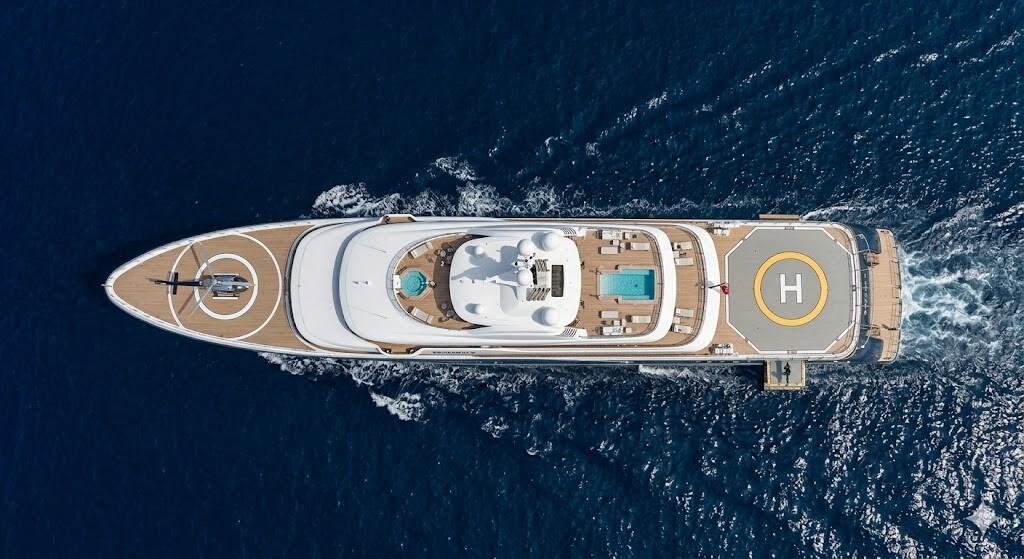
On a mega yacht, a single helipad creates an operational logjam if the owner’s private aircraft is permanently parked there. Dual pads solve this by dedicating one area (often the aft deck) to the resident helicopter, while keeping a second area (usually the bow) clear as a touch-and-go zone for arriving guests, crew rotations, or shore transfers.
2. Redundancy in Remote Exploration
For expedition vessels cruising the Arctic or remote islands, aviation is a vital lifeline. Two pads offer crucial safety advantages:
Wind Alignment: If shifting winds make landing on the stern dangerous, the pilot has the option to land on the bow.
Emergency Response: One pad can hold a support helicopter for scouting ice or terrain, while the other remains open for medical evacuation or search-and-rescue teams.
3. Storage vs. Quick Transitions
The two landing zones on a megayacht rarely serve the same engineering purpose:
The Primary Pad & Hangar: Located on the upper or aft decks, this fully certified station features refueling infrastructure and often a hydraulic lift that lowers the helicopter into a protected garage for long-term storage.
The Touch-and-Go Pad: Typically located on the foredeck, this is a reinforced surface meant strictly for quick drop-offs. When not in use, it easily converts into a sun deck, golf driving range, or basketball court.
4. Charter Logistics and Security
High-end charter clients frequently travel with extensive entourages, corporate guests, or private security details. Dual helipads allow support teams and primary guests to transit simultaneously, ensuring seamless air connectivity without delaying the ship's itinerary.
In the video below, you can watch the dual-helipad Broadwalk, built by Lürssen;


