




Would you like to have your watchlist on all your devices? Log in or register for free.
What Every Yacht Owner Should Know About War Insurance

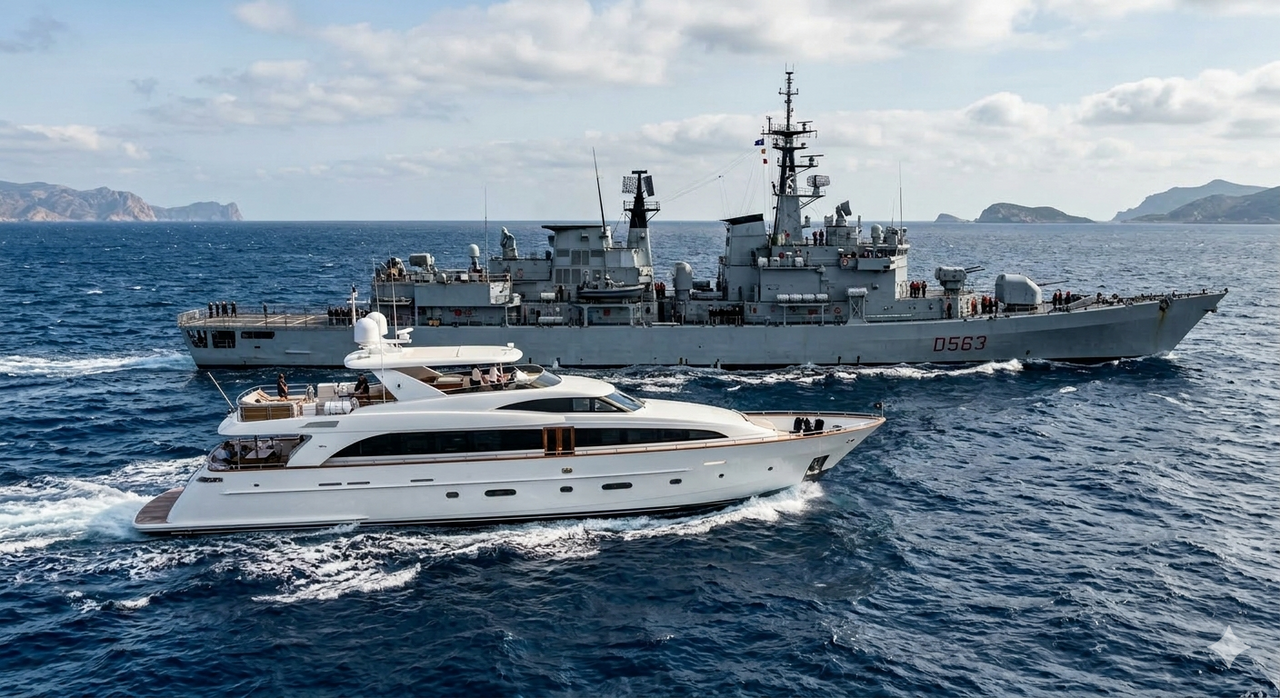
Most yacht owners take out comprehensive marine insurance and feel fully protected. But there is one risk category that every standard policy excludes by default: war. If your yacht is damaged, seized, or destroyed due to a hostile act, an armed conflict, piracy linked to geopolitical actors, or civil unrest, your insurer will most likely decline your claim. That is exactly where war risk insurance comes in.
Risks such as war, strikes, terrorism, and kidnapping require a separate, dedicated policy. War insurance protects yacht owners when conflict suddenly breaks out in waters that seemed safe at the start of the voyage. The scope of war insurance is determined by a London-based body called the Joint War Committee, which decides which regions are considered high-risk. Following the outbreak of war with Iran, the committee withdrew war insurance cover for vessels in the Gulf — meaning that obtaining cover in that region has since become more difficult. However, it is not impossible. If your yacht is currently in the Gulf, you can still arrange cover by paying a premium of around 1% or 2% of your vessel's value.
What Does War Risk Insurance Cover?
A war risk policy is a standalone cover that is never included in your standard policy and must be purchased separately. It protects against:
War, civil war, revolution, and insurrection
Seizure or detention by military or government forces
Abandoned mines, bombs, and weapons of war
Piracy (depending on policy wording and region)
Terrorism and sabotage
Strikes, riots, and civil commotion (SRCC)
When Do You Need It?
War risk cover becomes critically important when sailing near designated high-risk zones such as the Red Sea, the Gulf of Aden, parts of the Eastern Mediterranean, the Black Sea, or the Persian Gulf. It is also essential if you are berthing long-term in a marina in a country with political instability, or if your route passes through the Suez Canal or the Strait of Hormuz. The war in Ukraine and Houthi attacks in the Red Sea are recent reminders that geopolitical risk can arrive without any warning.
What Does It Cost?
Premiums are dynamic and change in line with real-time geopolitical conditions. An annual base policy is generally modest relative to the value of your yacht. When entering a designated high-risk area, an Additional Premium (AP) is charged on top of the base rate — and this can rise significantly within hours when tensions escalate. Voyage-specific cover is also available for one-off passages through risk areas.
Conclusion
War risk insurance is not just for commercial vessels. Every yacht that ventures beyond home waters deserves a thorough review of its war risk position. The cost is small; the gap it fills is not. Speak to a specialist marine insurance broker before you set sail — and make sure your cover keeps pace with the world you are sailing through.


